Alone in the Best Way: The Surprising Science of Why Solo Watching Makes You Feel Less Lonely
Picture this: it's a Friday night, and you're watching your favorite show with a group of friends. Someone's phone keeps buzzing. Another person won't stop making commentary. Someone else clearly hates the show but won't say so. By the time the credits roll, you feel vaguely drained — like you spent the whole evening managing the room instead of actually watching anything.
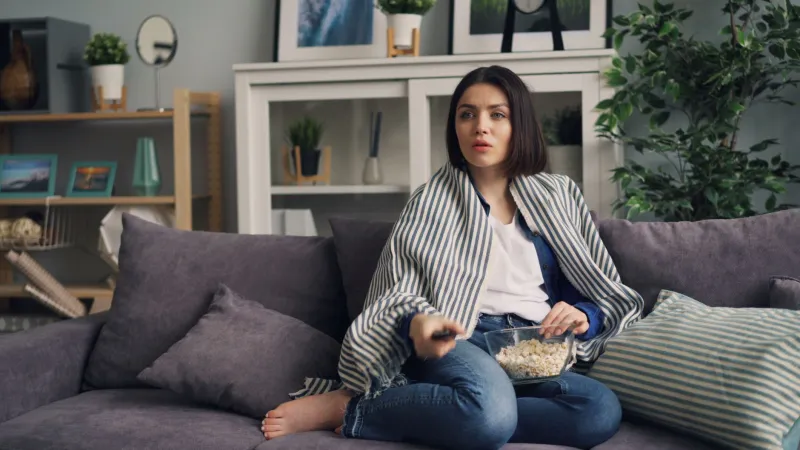
Now picture the alternative: same couch, same show, just you. A blanket, maybe a snack, zero negotiations. And somehow, inexplicably, you feel more connected — to the characters, to the story, maybe even to yourself.
If that second scenario sounds familiar, you're not antisocial. You're just experiencing something researchers are increasingly calling the loneliness paradox of shared media — the strange but well-documented phenomenon where watching alone delivers a deeper sense of emotional connection than watching in a group ever could.
The Group Watch Illusion
We're socially conditioned to believe that shared experiences are inherently richer. And in theory, that makes sense. Laughing together, gasping at the same plot twist, tearing up in sync — those are genuinely bonding moments. But here's the catch: they only work when everyone in the room is actually present for the same experience.
In practice, group watching is rarely that clean. Research in social psychology consistently shows that people in group settings spend a significant chunk of their attention managing social dynamics rather than engaging with the content itself. You're half-watching the show and half-watching the other people watch the show. Are they bored? Did that joke land? Should you explain that plot point?
The result is a kind of emotional split-screen — you're never fully in the story, and you're never fully in the room. It's the worst of both worlds dressed up as the best of both worlds.
Why Fictional Characters Are Better at Connection Than You'd Expect
Here's where neuroscience gets genuinely interesting. When you watch a show alone — really alone, no distractions, fully immersed — your brain starts doing something remarkable. It activates the same neural pathways associated with real social bonding.
This is the science behind what psychologists call parasocial relationships: the one-sided emotional bonds we form with characters, hosts, and personalities we've never actually met. And before you roll your eyes, understand that these connections are not a consolation prize for missing out on real relationships. Multiple studies, including research out of the University of Buffalo, have found that parasocial relationships serve a genuine psychological function — they buffer against loneliness, reinforce our sense of identity, and can even help us process complex emotions we haven't figured out how to articulate in our real lives.
When you're watching alone, you're not distracted by the social labor of group dynamics. You're free to fully inhabit the emotional world of the story. You grieve with the characters, celebrate with them, get furious on their behalf. That kind of emotional engagement — unfiltered and unperformed — is actually closer to real intimacy than a lot of the social interactions we have on a given Tuesday.
The Silence Problem No One Talks About
There's another layer to this that doesn't get nearly enough attention: the particular kind of loneliness that can show up inside a shared experience.
Sitting in the same room as someone you love, both of you staring at a screen, and feeling a quiet gulf between you — that's one of the more unsettling flavors of modern disconnection. It's not the loneliness of being alone. It's the loneliness of being almost together. And for a lot of people, that version stings sharper.
When you're solo, at least the solitude is honest. You know what you're working with. There's no ambient pressure to perform enjoyment or suppress your real reactions. If you want to pause and sit with a scene, you pause. If you want to cry without anyone noticing, you cry. The experience belongs entirely to you, and that ownership turns out to be deeply nourishing in a way that shared, negotiated viewing often isn't.
Me Time Is Actually About Belonging — Just Not the Way You Think
At MeTimeBox, we talk a lot about the value of curated solo entertainment, and this is exactly why. The me in me time isn't about isolation. It's about creating the conditions for genuine emotional engagement — which, paradoxically, makes you feel more connected to the world, not less.
When you choose what you watch, when you watch it, and how you experience it, you're not retreating from connection. You're building the kind of internal emotional vocabulary that makes real connection possible. The characters you love teach you things about yourself. The stories you return to tell you what you value. The genres you gravitate toward map the contours of your inner life in ways that are hard to access when you're performing your reactions for an audience.
Solo viewing, in other words, is a form of self-knowledge. And self-knowledge is the foundation of every meaningful relationship you have.
How to Actually Make Solo Watching Work for You
If you want to lean into this, a few things actually make a difference:
Go device-free (mostly). The parasocial bond only activates when you're genuinely present. Scrolling while watching splits your attention and kills the immersion that makes solo viewing so emotionally rich.
Follow your instincts, not the algorithm. Pick what genuinely interests you — not what you think you should be watching or what everyone else is talking about. The emotional payoff is highest when your investment in the content is authentic.
Give yourself permission to feel it. Laugh out loud. Pause when something hits. Rewind a scene that moved you. Without an audience, you don't have to moderate your reactions, so don't.
Treat it like actual time for yourself. Get the snack. Set the lighting. Make the space feel intentional. Solo watching hits differently when it's a chosen ritual rather than a default fallback.
The Bottom Line
Loneliness isn't about how many people are in the room with you. It's about whether you feel genuinely seen and emotionally engaged — and sometimes a well-chosen story, experienced in comfortable solitude, does that job better than a room full of people ever could.
Your solo couch nights aren't a symptom of disconnection. They're a pretty elegant solution to it.