Why Your Best Friend Hates Everything You Love (And What That Actually Says About Both of You)
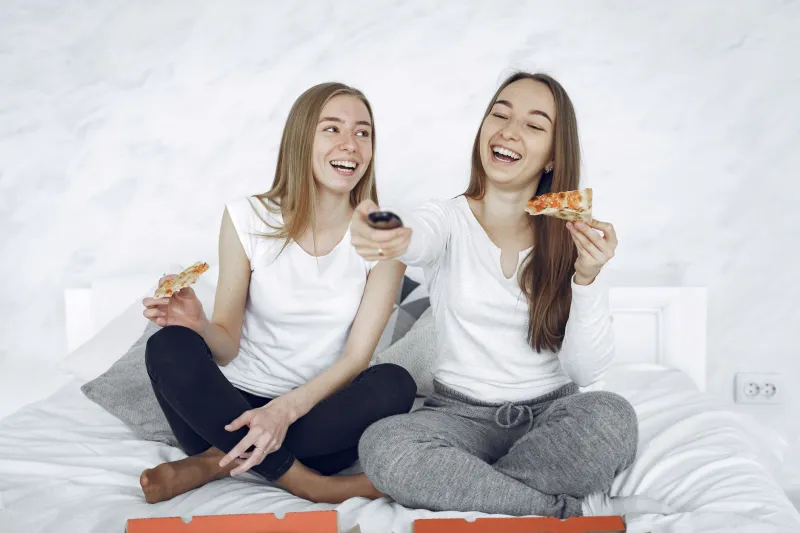
Picture this: You've just binged a limited series that wrecked you emotionally in the best possible way. You text your best friend immediately because obviously she needs to watch it right now. Two weeks later, she gets back to you with a thumbs down emoji and a single word: boring.
How? You grew up in the same town. You've shared a Spotify account for three years. You both cried at the same wedding. And yet, when it comes to what you actually want to sit down and watch, read, or listen to on a Friday night, you might as well be strangers.
This isn't a friendship problem. It's actually one of the more fascinating puzzles in entertainment psychology — and once you understand what's really driving your preferences, you'll never fight over the remote the same way again.
The Myth of "Similar People, Similar Tastes"
We tend to assume that people who share values, humor, and life experiences will naturally gravitate toward the same entertainment. It makes intuitive sense. But researchers who study media psychology have found that the connection between personality and entertainment preference is way messier than that.
Dr. Tilo Hartmann, a media psychologist whose work has been widely cited in studies on entertainment behavior, has argued that what we seek from entertainment is deeply tied to our current emotional state and our unmet psychological needs — not just who we fundamentally are as people. In other words, two people with nearly identical personalities might be in completely different emotional seasons of their lives, which sends them looking for totally different things on screen.
Your best friend who loves chaotic reality TV isn't less sophisticated than you. She might just be in a phase where she needs low-stakes stimulation and easy laughs after a genuinely hard year. Meanwhile, you're craving emotional depth because you've been feeling a little numb lately and need something to crack you open. Same friendship. Different needs. Completely different watchlists.
What Your Entertainment Choices Are Actually Revealing
Here's where it gets interesting. Entertainment psychologists suggest that our genre preferences function almost like a window into what we're quietly processing.
People who gravitate toward true crime and psychological thrillers, for example, often score higher in what researchers call need for cognition — a genuine enjoyment of effortful thinking and puzzle-solving. Meanwhile, fans of feel-good romantic comedies or cozy slice-of-life shows tend to prioritize affiliation needs, meaning they're actively seeking warmth, connection, and reassurance through their entertainment.
Neither is better. But they are different — and those differences often trace back to life experience more than raw personality.
Take the classic friend pair: one grew up in a chaotic household where unpredictability was the norm, the other in a quieter, more structured environment. The first might find comfort in high-stakes drama because it feels familiar and manageable at a safe distance. The second might find the same content overwhelming and actively seek out calmer, more predictable narratives. Same friendship, built over years of shared memories — but their nervous systems are running completely different entertainment algorithms.
Real Talk: The Friend Pairs Who Can't Agree on Anything
This plays out in real life constantly. Ask around and you'll find these dynamics everywhere.
There's the pair where one is obsessed with prestige dramas — think slow-burn character studies with morally ambiguous endings — while the other exclusively watches competitive cooking shows and home renovation content. They've been best friends since high school and genuinely cannot understand each other's choices. But dig a little deeper and the logic emerges: the prestige drama fan works in a highly structured corporate job and craves narrative complexity as an escape. The cooking show devotee is a freelancer whose daily life is already full of ambiguity, so she wants her downtime to be satisfying, contained, and resolved within the hour.
Or consider the music equivalent — two friends who both describe themselves as "indie" listeners, but one is deep into melancholic folk and the other lives for high-energy indie pop. Same broad taste category, wildly different emotional function. One is processing grief through music. The other is using it to manufacture momentum.
Your entertainment choices are, in many ways, a self-portrait. They show what you're working through, what you're running from, and what you need more of right now.
How to Actually Navigate the Taste Gap Without Making It Weird
So what do you do when your entertainment worlds just don't overlap? A few things that actually work:
Stop trying to convert each other. The impulse to make your best friend love your favorite show comes from a good place — you want to share something meaningful. But when she bounces off it, it can feel weirdly personal, like she's rejecting a part of you. Separate those things. Her disinterest in your show is not a verdict on your taste or your bond.
Get curious instead of defensive. Next time she raves about something you find unwatchable, ask a genuine question: What do you love about it? The answer will almost always tell you something real about where she is emotionally right now. That conversation is often more interesting than the show itself.
Build a shared entertainment ritual that isn't about the content. Some of the best watch parties happen around movies both people think are kind of ridiculous. The shared experience — the commentary, the snacks, the pausing to react — matters more than whether you're both genuinely invested. Find the overlap in how you like to consume entertainment, not just what you consume.
Curate for yourself without apology. This is something we believe pretty deeply here at MeTimeBox — your entertainment choices should be serving you. Not performing a version of you that's palatable to someone else, not compromising every time, not feeling guilty for loving what you love. The right content for your Friday night is the content that meets you where you actually are.
The Friendship Is Stronger Than the Algorithm
Here's the thing about taste differences between close friends: they're not a sign that you've drifted or that you don't really know each other. They're a sign that you're both complex people with rich inner lives that extend beyond your shared history.
The most interesting friendships aren't the ones where two people are perfectly mirrored. They're the ones where you can sit across from someone who just recommended something you'll never watch, feel genuinely baffled by their enthusiasm, and still love them completely.
Your entertainment choices are personal. Your friendship doesn't have to be.
And honestly? The friend who will never watch your favorite show but will always show up when you need her? She's the real main character.